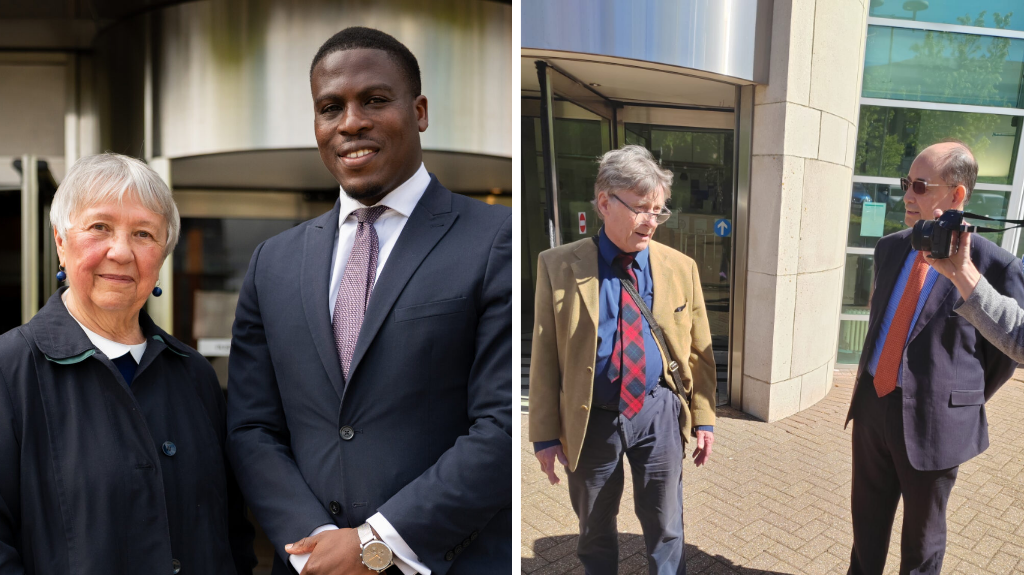
Image – Rose Docherty and David Skinner outside court after their victories
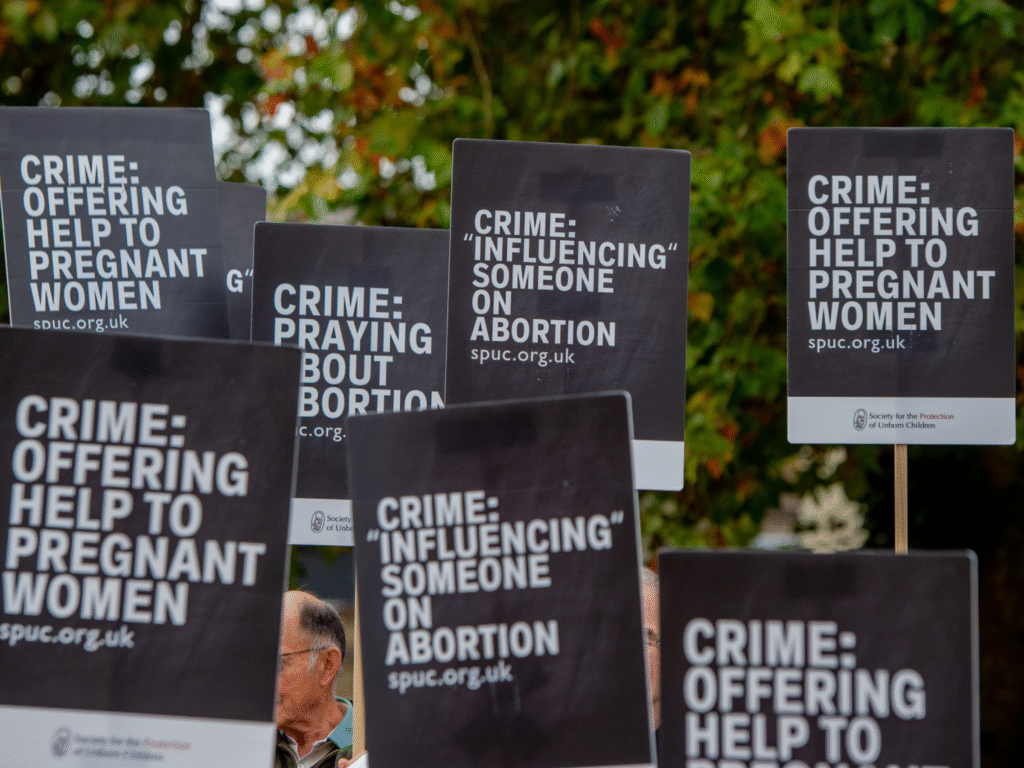
A series of prosecutions brought against pro-life campaigners across the UK have collapsed in the courts, in what are being hailed as significant blows to overreaching, pro-abortion lawfare.
In Scotland, 75-year-old grandmother Rose Docherty has secured a decisive courtroom victory after charges against her were dismissed in full. Docherty had been arrested outside Glasgow’s Queen Elizabeth University Hospital for holding a sign in the buffer zone. It was simply an offer of conversation: “Coercion is a crime, here to talk, only if you want.”
She became the first person to be prosecuted under Scotland’s abortion buffer zone law, legislation designed to silence the message of life within 200 metres of abortion facilities. Yet when the case was tested in court, it quickly unravelled.
Sheriff Stuart Reid ruled that prosecutors had “failed to disclose an offence known to the law of Scotland.” Crucially, the Crown Prosecution Service could not provide evidence that Docherty had influenced anyone seeking abortion services that day, a central requirement of the law.
The ruling could set a major precedent. It suggests that simply being present, offering conversation, or expressing a viewpoint, without clear evidence of influence or harm, is unlikely to meet the legal threshold for prosecution under buffer zone legislation.
Docherty described the outcome as “a major victory for free speech,” adding that she had endured months of legal proceedings “merely for exercising my free speech rights.”
A similar collapse has taken place in England. David Skinner, an 81-year-old Christian campaigner, has had his conviction overturned by the High Court after being prosecuted for sending graphic images of abortion to the police. His intent was to report the crime of “mass murder” in Dorset’s Ophir Road BPAS clinic.
Skinner had been convicted under communications laws and fined £3,840. However, on appeal, a High Court judge parachuted into Bournemouth ruled that upholding the conviction would be a disproportionate interference with his rights to freedom of expression and religion.
Mr Justice Saini, a Sikh, made clear that even deeply offensive or disturbing speech is protected under the law when it relates to matters of public importance. The ruling sets an additional precedent that communications laws cannot be used to silence political viewpoints simply because they provoke strong reactions.
He cited the mass publishing of images of the corpse of Emmet Till or the use of graphic warning imagery on cigarette packets to change the conversation around American civil rights or provoke smoking cessation, drawing a link between these and Mr Skinner’s use of abortion imagery. He alluded to the fact that society and political discourse have always been shaped by vivid imagery, however shocking.
Taken together, the two cases represent a significant legal pushback in this week of unexpected victories. In both instances, prosecutions were brought in the context of abortion-related issues, and in both cases, they failed when subjected to proper judicial scrutiny.
The precedents now established could have far-reaching implications. In Scotland, buffer zone enforcement may face greater legal challenge if authorities cannot clearly demonstrate actual “influence.” In England, the use of communications legislation against campaigners has been firmly limited by the High Court’s ruling.
Commenting on the breakthroughs, Michael Robinson, SPUC’s executive director said: “To see two active members of SPUC exonerated after being relentlessly pursued by an angry establishment should be a time of great rejoicing for the pro-life movement. If we cannot speak up to save babies from destruction in abortion, then what is left for us to do?
“We hope that these precedents set in court will embolden those with a heart for the unborn to continue making public stands against the worst human rights tragedy in history. In the meantime, SPUC will continue working to change the culture and reverse the legislation that allowed these cases to be brought forward in the first place. Peaceful expression should never be a crime.”
If you’re reading this and haven’t yet donated to SPUC, please consider helping now. Thank You!