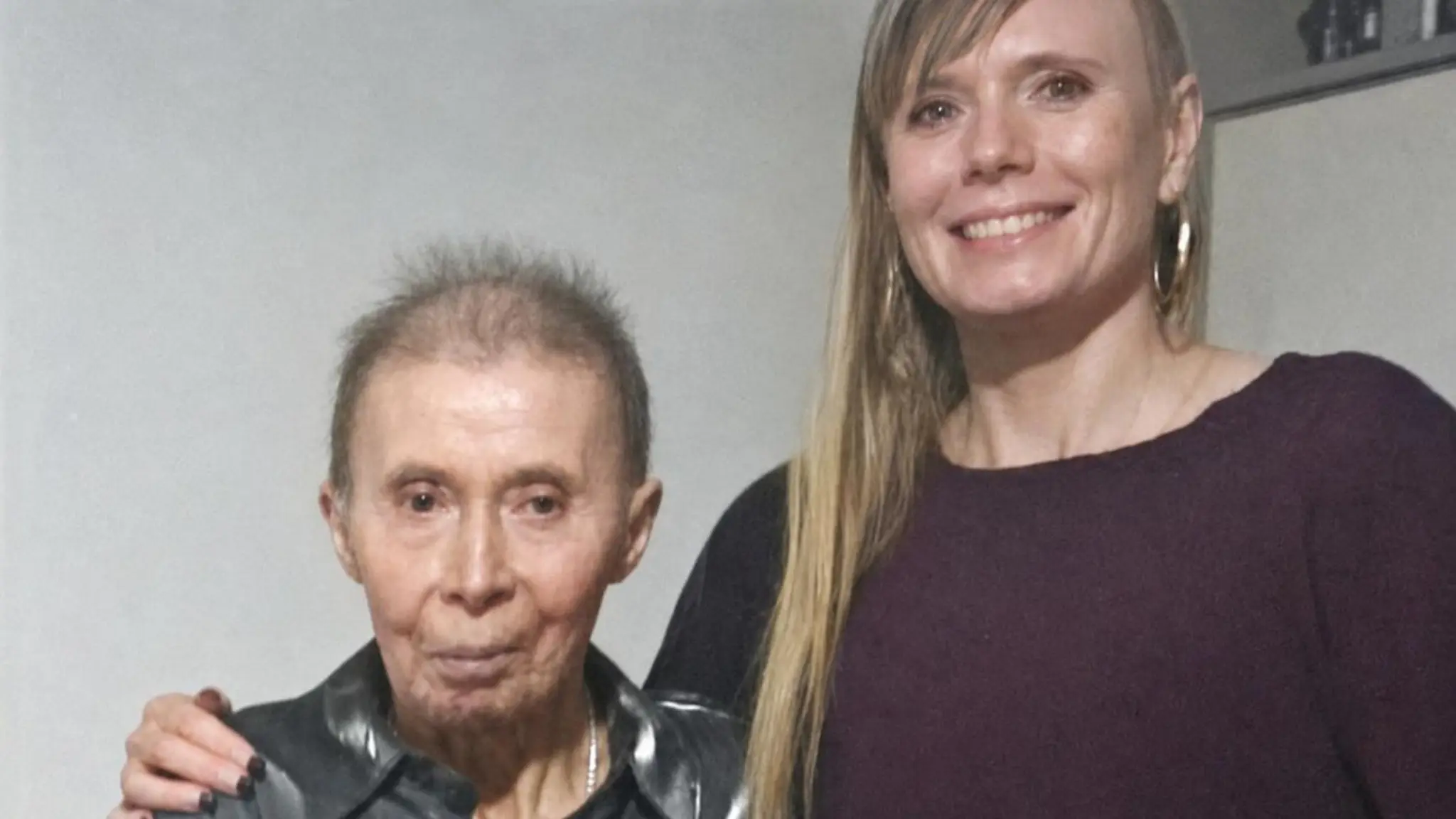
Image Source: Suffolk Police | (L) Lorna Nightingale, (R) Emma Nightingale
A woman from Lowestoft who was accused of murdering her 70-year-old mother has said she gave her a fatal quantity of medication after her mother repeatedly asked for help to end her life.
Emma Nightingale, 36, was charged with the murder of her mother, Lorna Nightingale, after Lorna died from a drug overdose in London last December.
Nightingale has now spoken about the circumstances surrounding her mother’s death, saying Lorna had “begged her” to obtain the medication and had become unable to tolerate her declining health.
“She’d had enough and wanted to go with dignity,” Nightingale said.
Lorna suffered from chronic kidney disease, severe dental problems, and cataracts in both eyes. She was not, however, terminally ill.
During the first half of 2025, Nightingale moved with her mother from Lowestoft, Suffolk, to a studio in East London. She said that during Lorna’s final weeks, the pair discussed ending her life before her suffering became worse.
Nightingale’s Christian faith made the decision particularly difficult.
Lorna had apparently considered travelling to Switzerland, where assisted suicide is permitted in certain circumstances, but her daughter said she was too unwell to make the journey.
“Mum never would have made the journey, and it was her wish to pass away at home in her own country,” Nightingale said.
She has declined to explain precisely how she obtained the medication, reportedly because she fears that the doctor who supplied it could face legal consequences.
Nightingale said she remained with her mother as she died.
“She wanted for me to be there with her,” she said. “She was happy and smiling right up to the end, watching all her TV shows in bed surrounded by the flowers I constantly bought her.”
Afterwards, Nightingale called the ambulance service.
She was subsequently arrested and charged with murder, spending approximately five months in custody before pleading not guilty.
Prosecutors later discontinued the murder case after concluding that there was “no longer a realistic prospect of conviction”. Nightingale is reportedly still waiting to discover whether she will face any alternative charges.
Assisting another person to take their own life remains a criminal offence in England and Wales, carrying a maximum sentence of 14 years’ imprisonment, though prosecution has become far less likely after Sir Keir Starmer, in his time as Director of Public Prosecutions, changed sentencing guidelines for those who aid the suicide of a loved on in 2010.
After a bill proposed by Kim Leadbeater MP failed in its passage through the House of Lords, Rochester and Strood MP Lauren Edwards has resurrected it, attempting to legalise assisted suicide in clinical settings in England and Wales. Lorna’s case falls outside the eligibility criteria proposed by that legislation because, according to her daughter, she was not terminally ill.
Nightingale nevertheless continues to defend her decision.
“It was the hardest decision I’ve ever had to make,” she said.
SPUC CEO John Deighan said: “The press has painted Lorna Nightingale’s death a mercy killing by a loving daughter. It is not. We have heard Emma Nightingale’s version of events, but we will never hear Lorna’s side. This is the issue with normalising a culture of assisted suicide—the most vulnerable lose their voice and that cannot be reversed.”
He continued: “Legalising assisted suicide through the Terminally Ill Adults (End of Life) Bill in England and Wales would create thousands of Lorna Nightingales. Voiceless vulnerable people who have their lives cut short by a state-sanctioned suicide programme. SPUC will fight tooth and nail to stop this from happening.”