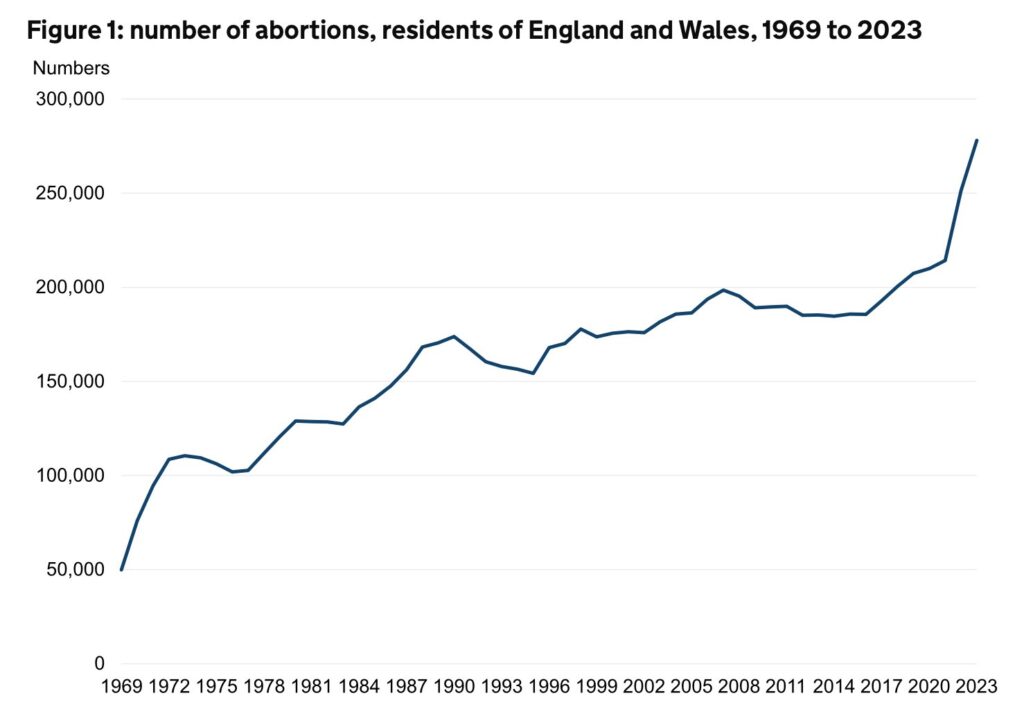
New abortion figures from the Department for Health and Social Care have been released, covering 2023, which show 277,970 terminations, an 11 per cent increase.
Michael Robinson, Executive Director of SPUC, commented: “These are the highest numbers of abortions in the UK’s history, nearly 300,000 per year across all four nations – a figure never envisaged when the legislation was first passed. Drilling down into these figures, we see the number of second and subsequent abortions rising to four in 10 (42 per cent) of all terminations, while the official figures linked to complications continue to remain underreported. According to the government, there were just 315 abortions that resulted in at least one complication detailed on the HSA4 form. However, freedom of information requests obtained by SPUC suggest this data is massively wrong. For example, in 2022, in just one area covered by an ambulance service there were 480 emergency phone calls to 999 where abortion was specifically mentioned and nearly 300 ambulance callouts.
“Why this matters is that peers are set to debate the greatest liberalisation of the abortion law since 1967, with plans to legalise so-called abortion on demand and up-to-birth later this month. These ideological changes, put forward to prevent any woman from being criminalised for aborting a baby of any gestation, will cause irreparable harm. They remove safeguards that have been designed to protect women from being coerced into killing their unborn baby by an abusive partner or feeling pressured into terminating a baby because they are for example, the wrong sex. They are also a further attempt to remove the important role of doctors from the process. Those pushing for the change would do well to remember that doctors are not only an important safeguard against abuse, but play a vital role in explaining the process, complications and risks and can signpost vulnerable women to support, including counselling.”
Mr Robinson concluded: “Watering down the safeguard in the Abortion Act, by tagging on some amendments to the Crime and Policing Bill, has meant that the full impact of this change has not been fully scrutinised or debated. Interestingly, polling we commissioned in 2024, also showed abortion decriminalisation was not backed the public. When presented with the reality of the change, support plummeted to just one in eight. The poll also found that many people were unaware of the change and others did not understand its impact. This is why the House of Lords should reject any change, and instead urge the Government to look at stricter safeguards, ensuring doctors continue to play an integral part in the process and women have access to counselling following an abortion.”