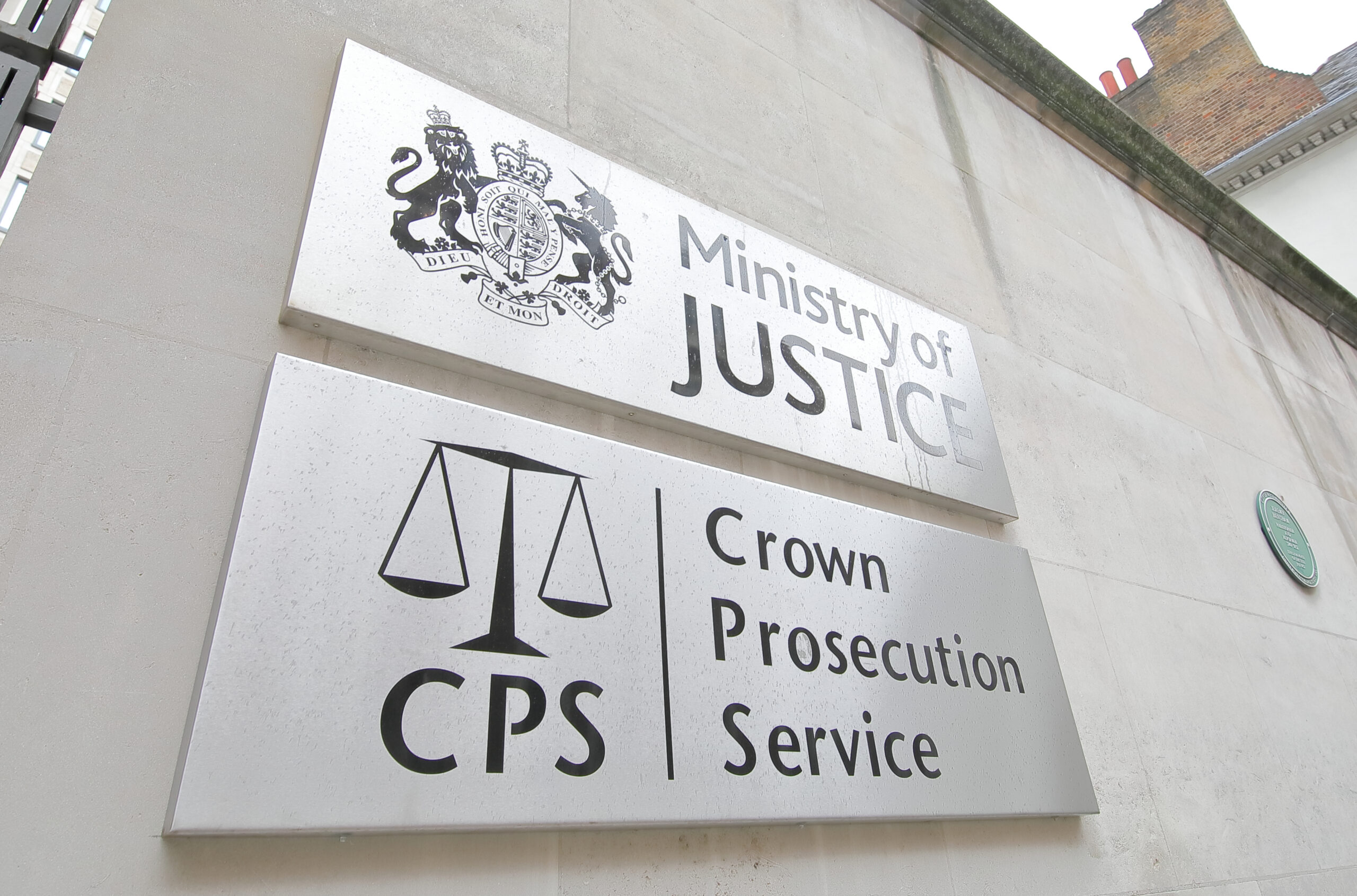
Image – Shutterstock: Crown Prosecution Service offices in London
Thirteen suspected cases of assisted suicide are currently being considered by prosecutors in England and Wales, according to new figures from the Crown Prosecution Service, highlighting the growing legal and ethical uncertainty surrounding the issue.
The data shows that 209 cases have been referred to the CPS by police between April 2009 and March 2026, an increase on the 199 recorded by this time last year. Of those, 131 were not taken forward, 42 were withdrawn, and only six have resulted in successful prosecutions over nearly two decades.
Encouraging or assisting suicide remains illegal under the Suicide Act 1961, yet the relatively low number of prosecutions reflects a system increasingly shaped not by statute alone, but by prosecutorial discretion.
That discretion is governed by guidelines introduced in 2010 by the then Director of Public Prosecutions, Sir Keir Starmer, now the Prime Minister.
The guidelines were brought in following a legal challenge by Debbie Purdy, and set out factors for when prosecution is, or is not, considered to be in the public interest. They suggest that cases are less likely to be prosecuted where someone acted out of compassion, where the person made a “voluntary, clear, settled, and informed decision”, and where assistance was limited.
Conversely, prosecution is more likely where there is pressure, lack of mental capacity, personal gain, or involvement by healthcare professionals.
In practice, critics argue this has created a grey area in which the law remains formally strict, but is unevenly applied. The CPS itself acknowledges that such cases are “complex and sensitive”, ranging from clear coercion to claims of compassionate assistance.
The latest figures come as legislation to legalise assisted suicide appears likely to fail in Westminster, with the Terminally Ill Adults Bill at risk of running out of time in the House of Lords.
Yet the situation raises broader questions about the role of the current Prime Minister. Sir Keir Starmer not only authored the guidelines that now shape decisions not to prosecute in many cases, but has also been associated with a political environment in which assisted suicide legislation has been brought forward through a Private Member’s Bill.
Opponents argue that this combination risks further blurring the boundaries between what is illegal in principle and what is tolerated in practice.
Meanwhile, concerns remain about the impact on vulnerable people. The CPS guidelines explicitly highlight pressure, coercion and lack of capacity as key reasons to prosecute, underlining the risks that exist even under the current legal framework.
SPUC’s Communications Manager, Peter Kearney, echoes this sentiment: “If, even under Sir Keir Starmer’s weaker rules, there are still grounds to investigate and even prosecute people in England & Wales for assisting in a suicide then SPUC’s position against the Terminally Ill (Adults) Bill is entirely vindicated. Around 3% of investigated assisted suicide cases in the last fifteen years have led to prosecutions due to coercion and other concerns. The proposed assisted dying regime in Westminster would allow these people to slip through the net without protection or justice. Coupled with the increased numbers that would use state subsidised suicide, we are left with a tragedy for the vulnerable on our hands.
“These stats from the CPS affirm SPUC’s opposition to the Leadbeater Bill. Assisted suicide will never be safe.”
If you’re reading this and haven’t yet donated to SPUC, please consider helping now. Thank You!