Image Source: Shutterstock
Scientists have moved closer to creating human sperm in the laboratory, a development presented as a potential treatment for male infertility but which also raises profound ethical questions about the creation and destruction of human embryos, and the prospect of deliberately creating children without a mother or father.
Researchers at the University of Pennsylvania have converted human skin and blood cells into induced pluripotent stem cells before developing them into spermatogonia, the precursors from which mature sperm develop. Six months after transplantation into a supportive biological environment, the cells had reached the spermatogonia stage, although they did not mature into sperm capable of fertilisation.
Professor Kotaro Sasaki described the achievement as a “major step” towards in vitro gametogenesis (IVG), the creation of reproductive cells outside the human body.
More controversially, US biotechnology company Paterna Biosciences announced in May that it had produced functional human sperm entirely in the laboratory from cells obtained through a testicular biopsy. The company claims that it has already used the sperm to fertilise human eggs and create embryos, although its results have yet to undergo the independent scrutiny associated with peer-reviewed publication.
While such technology is promoted as offering hope to men suffering from infertility, its development brings with it the ethical problems already associated with IVF, particularly the deliberate creation of embryonic human lives for experimentation, testing, selection, and destruction.
The concerns are particularly significant because the latest research follows another major IVG experiment published in Nature Communications in 2025.
Researchers led by Nuria Marti Gutierrez transferred nuclei from human skin cells into donor eggs whose nuclei had been removed. Through an experimental process termed “mitomeiosis,” researchers attempted to halve the number of chromosomes before fertilising the resulting cells with sperm and creating embryos. The researchers themselves described the work as proof of concept requiring further research before any clinical application.
Taken together, advances in creating both male and female reproductive cells raise possibilities extending far beyond treating infertility.
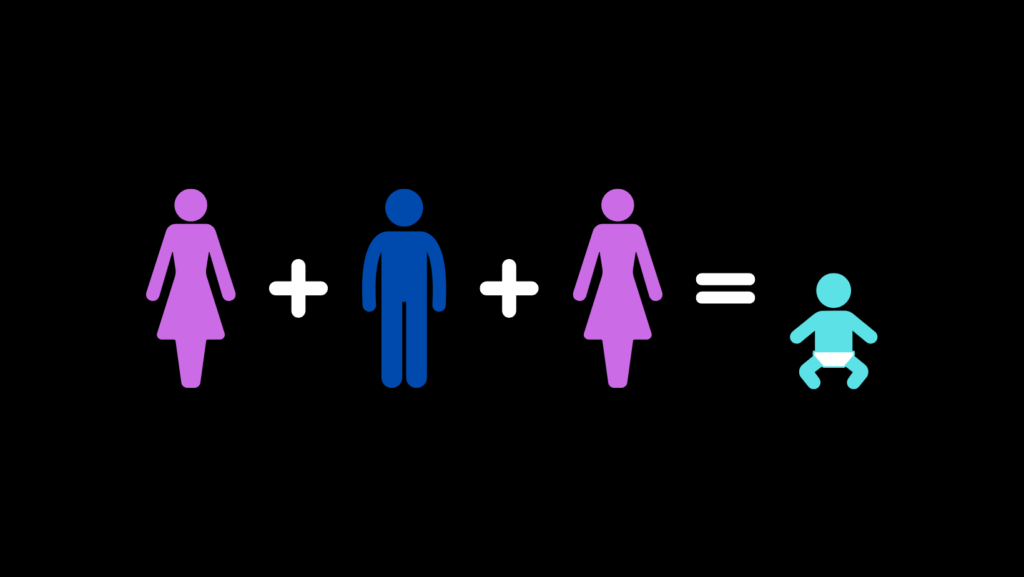
If scientists eventually succeed in producing functional eggs from male cells, two men could theoretically both be genetically related to the same child, with one providing cells from which an egg was manufactured and the other providing sperm. Conversely, producing sperm from female cells could potentially allow two women to reproduce without a biological father.
Such developments make it conceivable to manufacture children deliberately deprived from conception of either a mother or a father.
John Deighan, CEO of SPUC, said: “The anguish caused by infertility is real, and it’s understandable to see so many resources directed into a scientific solution but there are grave ethical concerns when that research goes past simply restoring healthy reproductive function that the scientists like to ignore. A key one that should be obvious is that children have a right to their mother and father. The development of IVG practices erodes that. Another is that children have a right to life. Creating embryos who will soon be destroyed out of scientific vanity erodes that right too.”
“Millions of children are killed in abortion every year. We do not need to scientifically create what we are already destroying. IVG cannot come to Britain, and it should stop elsewhere too.”