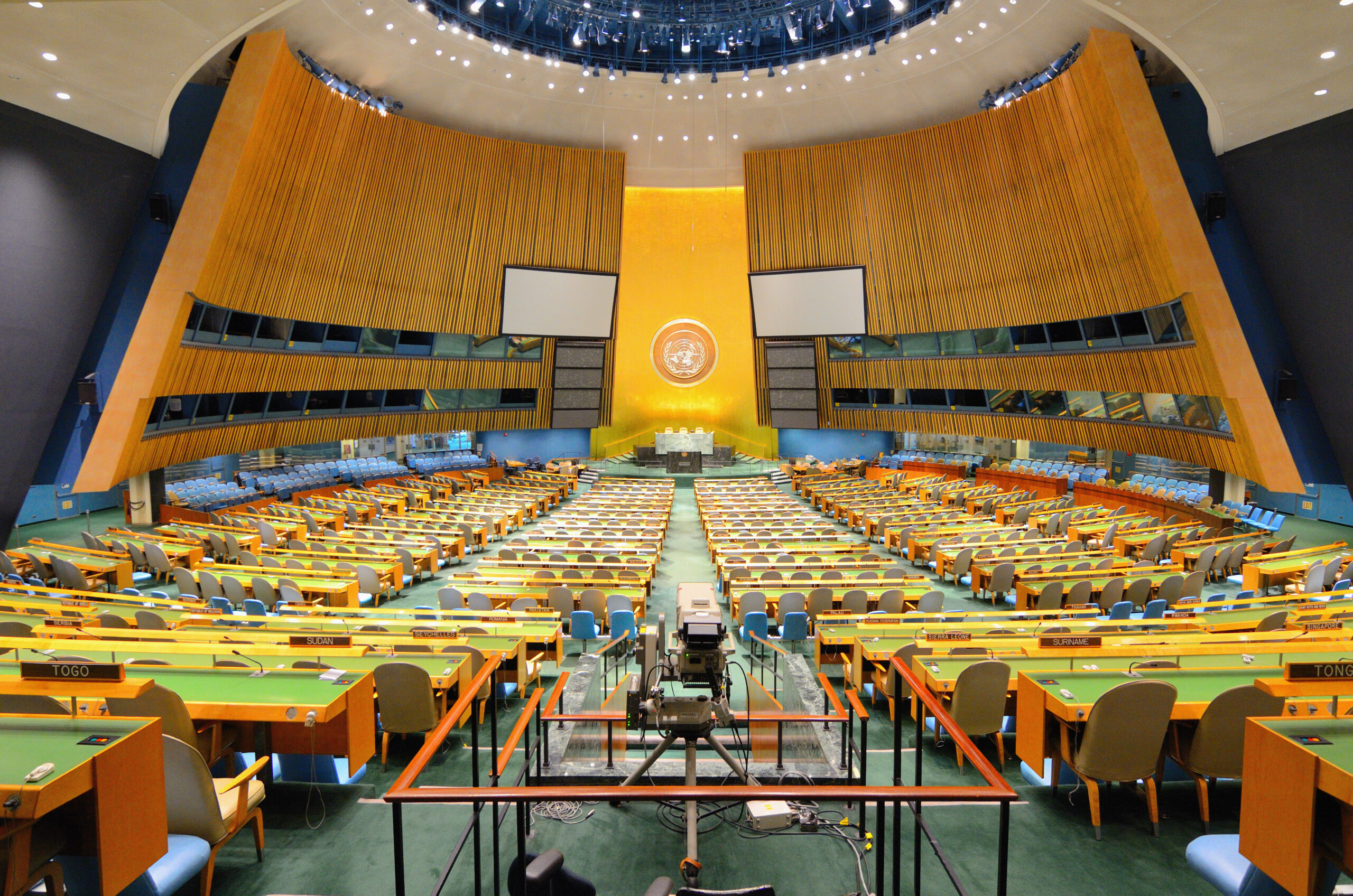
Image: Envato – UN General Assembly, New York City
Nine Republican members of the US Congress have called on the Trump administration to block the appointment of Rebeca Grynspan as the next United Nations secretary-general, amid concerns that she could use the position to promote abortion internationally.
In a letter to US Secretary of State Marco Rubio on 20th November, the lawmakers urged the administration to exercise its veto power, citing Grynspan’s record of supporting the expansion of abortion, including among adolescents.
The former vice-president of Costa Rica has led the United Nations Conference on Trade and Development (UNCTAD) since 2021 and was nominated for the position of secretary-general in March.
The lawmakers raised concerns that her appointment could lead to increased pressure on countries whose domestic laws protect unborn children.
Opposition to Grynspan’s candidacy has also come from nine conservative organisations, including the Heritage Foundation and the Center for Family and Human Rights (C-Fam), which contacted Rubio separately on 16th November.
Grynspan remains in contention for the role despite receiving two negative votes from permanent members of the UN Security Council during a preliminary ballot. The voting process remains confidential, and it is not known whether the United States was among those expressing opposition.
Under the UN’s appointment process, any of the five permanent members of the Security Council, which include the United Kingdom, can veto a candidate before a recommendation is made to the General Assembly.
The secretary-general cannot directly change national abortion laws. However, the position carries considerable diplomatic influence and provides a platform from which to shape the priorities of the international organisation.
While no international human rights treaty explicitly establishes a universal right to abortion, UN human rights bodies have interpreted existing treaty obligations as requiring access to abortion in certain circumstances. The scope of these interpretations remains disputed.
SPUC Executive Director, Michael Robinson, said: “The use of international institutions to pressure nations into accepting abortion has disturbing parallels with colonialism. Western countries should not assume that their attitudes towards abortion give them the authority to impose those views on the rest of the world.
“Many countries recognise the right to life of unborn children in their laws. Their sovereignty and cultural values deserve respect, rather than being treated as obstacles to an international abortion agenda.
“The United Nations should be a forum in which all nations are heard, not a vehicle through which wealthy and powerful countries impose their ideological priorities on others.”