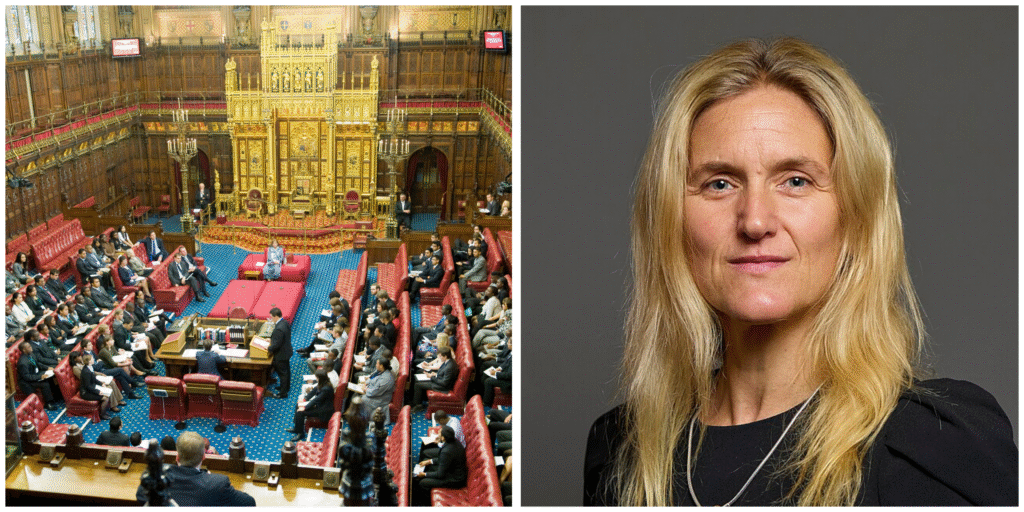
Critics of the Terminally Ill Adults (End of Life) Bill are becoming increasingly frustrated as the Bill’s sponsor refuses to engage with their concerns.
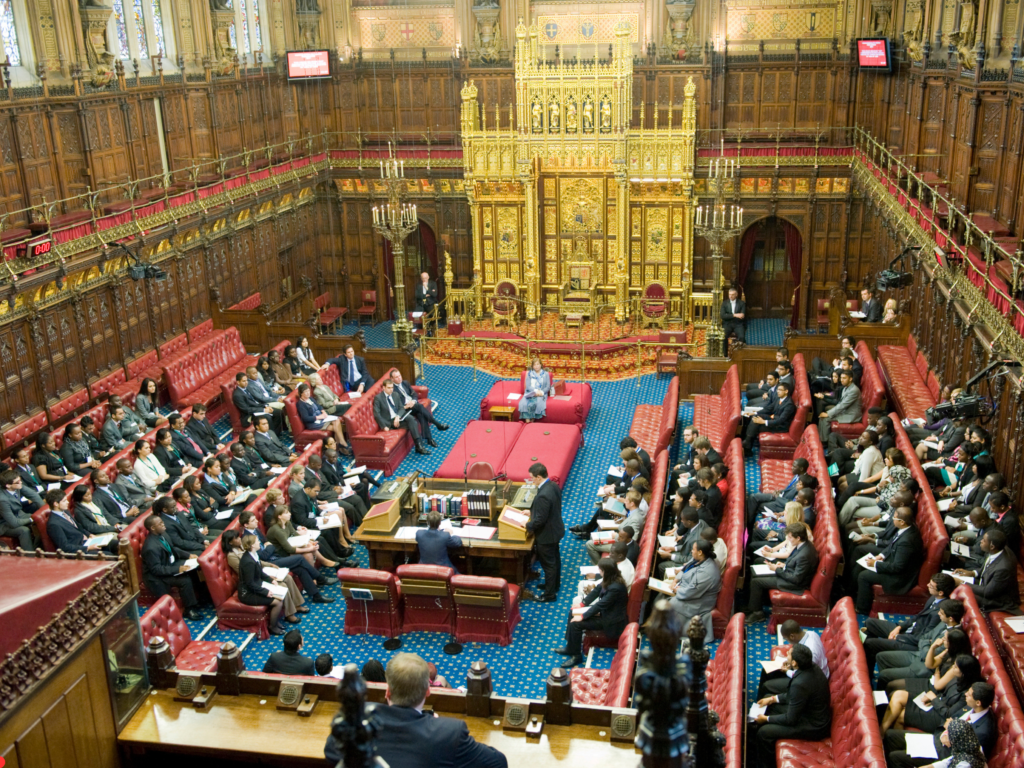
Debate on day six of the committee stage in the House of Lords was dominated by two major groups of amendments: those aimed at strengthening safeguards for vulnerable individuals and a series of textual changes intended to bring greater transparency to the Bill.
Coercion, psychiatric conditions and financial constraints
Both Lord Falconer and Kim Leadbeater (the sponsor in the House of Commons) have repeatedly claimed that the purpose of the Bill is to respect the autonomy of terminally ill patients who wish to end their lives prematurely. However, a major criticism of the draft legislation has been its lack of protection for people who might be forced to seek assisted suicide due to adverse circumstances.
Arguing that a truly autonomous choice required detailed, accurate and independent information, Baroness Finlay said that this information should include advice on all financial support available to the terminally ill.
“Ensuring that people can access all the benefits that they are entitled to is a safeguard against a person seeking assisted dying because of poverty,” she said.
“Financial pressures are real. Six months of care costs could equate to £25,000 to £40,000 of expense borne by an individual paying for their own residential care.”
A further amendment aimed at strengthening protections was tabled by Baroness O’Loan, who sought to prevent the assisted suicide of people with serious mental health conditions such as bipolar disorder, major depressive disorder or schizoaffective disorder. She pointed out the Bill’s failure to distinguish between people who might seek an assisted suicide as a conscious choice and those who sought to end their lives due to a history of psychiatric problems.
“Some mental health conditions,” she said, “have suicidality as a feature of the disorder. These people are, by very definition, at high risk of suicidality and self-harm.”
Several Peers called for those seeking assisted suicide to state the reason for their decision. They argued that this would help ensure that the request was not motivated by family members playing on the fears of a terminally ill person that he or she would become a burden. In 2024, 42% of those seeking assisted death in Oregon cited this reason for their request. Addressing this problem, Baroness Lawlor said:
“It is all too easy to imagine families pressing, influencing, perhaps coercing, an ill person into a suicide they do not genuinely desire by appealing to altruistic feelings that they do not want to be a burden or to cause distress, especially to those they most love. Even worse, it is all too easy to imagine how, in the dismal future of a world where the Bill becomes law, such ways of thinking will have become a social norm.”
After restating the claim that the Bill was about freedom of choice, Lord Falconer made clear that he would not question the motives of anyone who wished to die. Lord Harper then asked whether he accepted that some people face serious limitations on their ability to make a truly free choice.
“These amendments,” he said, “are trying to make sure they are making a free choice, not one that has been constrained by their other circumstances. Does the noble and learned Lord accept that it is a problem if someone has all these constraints on them and is not really making a free and unconstrained choice…”
Unsurprisingly, Lord Falconer rejected any criticism of the Bill and refused to accept that someone who wanted to live might be compelled to choose assisted suicide due to poverty or lack of social care. “It is very difficult and would be inappropriate,” he said, “to try to examine exactly why people make particular choices.
“I am saying that everybody should have the choice. The way that one makes the choice is inevitably determined by how one got to the point where one had to make it. It is an impossible question. Why do we all make choices? They are all affected. Some people make them because they are richer or poorer than others, but I am not in favour of drawing financial distinctions.”
For Peers who have not yet made up their minds about the Bill, this apparent disregard for the plight of the less well off could prove to be decisive when it receives its Third Reading.
Avoiding euphemisms
The second group of amendments dealt with what Lord Frost described as the “dangerous ambiguity at the heart of the Bill.” Polling has shown that the phrase “assisted dying” is often understood to refer to palliative or hospice care. In a series of amendments, Lord Frost proposed replacing “assisted dying” with “medical help to commit suicide by provision of lethal drugs”.
“All these amendments have one thing in common. They would replace phrases including the word ‘assisted’ or ‘assistance’ with something much clearer—an explicit reference to what is actually provided for in the Bill, the provision of “medical help to commit suicide by provision of lethal drugs”.
Lord Frost’s proposal received vociferous support with several Peers stressing the need for legal clarity, especially as the Bill would also apply to people with intellectual disabilities, autism and mental health disorders. A point taken up by Baroness Grey Thompson:
“We are all spending many hours working on this Bill, but, if the outside world does not understand what is meant by “assisted dying”, we could be in a situation where somebody with learning disabilities or who uses British Sign Language, who has not spent as much time as we have interrogating the Bill in every single session, might not understand what they are signing up to.
She concluded saying “…I have used ‘assisted suicide’ today, and I will from now on, because that is what the Bill is going to do to the people who sign up to it.”
Despite these objections, Lord Falconer insisted that the current wording was clear and accurate and that the proposed amendments were unnecessary, arguing: “It is the drafting of a professional draftsman and I strongly urge the Committee to stick with the non-emotional, accurate, clear drafting that is there already.”
Increasing frustration
Earlier in the debate, Lord Empey drew attention to the increasingly obvious contradiction between Lord Falconer’s promise to address the concerns of his critics and his steadfast refusal to concede that any further changes are necessary.
“I do not mean to be unkind,” he said, “but there is no point in him getting up every Friday like Stonewall Jackson and saying, basically, ‘I’m right, and you’re wrong.’ There is a difference of opinion—a chasm, in many respects—over a lot of these issues. To be brutal about it, we need to see the colour of his money. I hope that would allow us to go forward, but unless we deal with these fundamental, basic issues, then we will have a very long slog indeed.”
The longer Lord Falconer maintains this contradiction, the less likely it becomes that those Peers still sitting on the fence will come down on his side.
If you’re reading this and haven’t yet donated to SPUC, please consider helping now. Thank You!