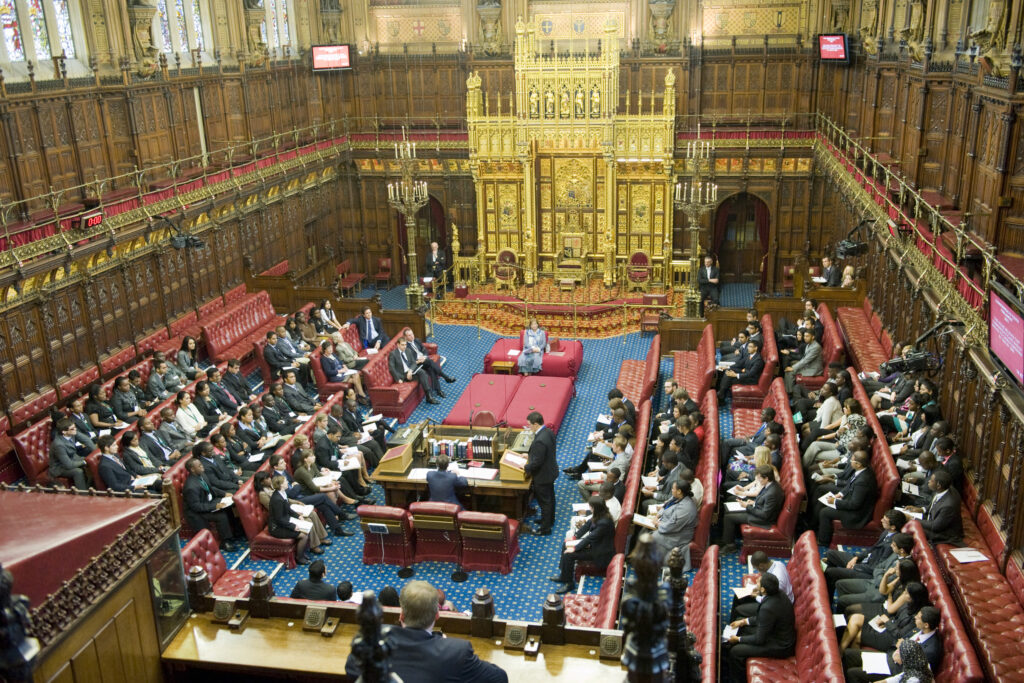
In a late-night session in the House of Lords, peers yesterday delivered a powerful challenge to proposal to radically alter the legal framework governing abortion in the UK.
The debate at Committee stage of the Crime and Policing Bill focused on Clause 191, which would remove all criminal sanctions on women who induce their own abortions at any stage of pregnancy, and associated amendments.
As is often the case at committee stage, there were no votes. However, many peers spoke out strongly against the inclusion of the abortion decriminalisation clause (Clause 191) in the Bill. Nearly 20 peers spoke directly against the clause, with many others expressing serious concerns.
The case for removing Clause 191 was led by Baroness Monckton of Dallington Forest. She set out the argument powerfully, saying:
“Laws exist for a variety of reasons. Sometimes, they exist to deter us from doing things that would cause significant harm to ourselves or others, out of motives that may be devious or simply desperate. The current law prohibiting women from performing their own abortions after 24 weeks is one such law. The existing legal deterrent protects women. For example, if a partner seeks to pressure a woman into an abortion beyond the 24-week limit — a limit which I note is already double that common in most European countries — a woman can currently point to the criminal law as a reason for not doing so. Removing this would make it much harder for vulnerable women to resist such pressure and would be particularly troubling given the dangers of unsupervised, self-induced abortions later in pregnancy.”
She then summed up the regressive nature of the proposal, saying:
“This is the case for absolute decriminalisation of abortion in any circumstances, and that is the true intention of the proposers of this clause. It would mean that up to full term, the viable unborn child would have the moral status of property, just as a slave did in the American Deep South in the 18th century. No one could be criminally liable for the destruction of their own human property. I do not consider this progressive.”
A number of other important amendments were also debated. Baroness Foster of Aghadrumsee led efforts to end the pills by post policy, exposing how abortion providers are now calling for decriminalisation to shield themselves from the serious consequences of that policy. As she put it:
“It is remarkable that one of our leading abortion providers should respond to its own mistakes — sending pills to women beyond the legal limit through a scheme for which it lobbied and from which it benefits — by trying to push for even more radical laws that minimise accountability.”
Lord Bailey also tabled an amendment to introduce a mandatory safeguarding investigation whenever an abortion is performed on a girl under the age of 16. He warned:
“I am very worried about the real-world consequences for young women in vulnerable situations where, when they are being coerced, their abusers would know that no investigation is even possible. No matter where you stand on the question of abortion, surely noble Lords can see that the most vulnerable young women should be protected by us in law.”
Peers also highlighted gaps in data and guidance on how investigations would proceed under the new law, urging clearer safeguards for vulnerable women and unborn children.
What did the Government say?
The Government minister maintained that the Government was neutral on the issue of decriminalisation. However, she seemed committed to retaining the pills by post policy, arguing that the effect of the new clause to repeal it “would be to limit access to home use of early medical abortion pills because of lack of resources for abortion providers to hold in-person consultations”.
The shadow minister speaking for the Opposition also did not take a view on the substance of clause 191, but was scathing about the deficiencies of the process, saying “this proposal has not undergone any of the usual stages of policy formation. As your Lordships will well know, where a major change to the law is proposed, the Government would normally publish a White Paper or Green Paper, commission an expert panel or review, gather evidence, conduct a public consultation, and publish an impact assessment and relevant supporting documents. The policy proposal would then be published as part of the Bill. It would be subject to detailed scrutiny in a Public Bill Committee, where witnesses would be invited to give evidence. None of these steps has been taken. Whatever one’s views on the merits of Clause 191, that is not a recipe for good law.”
What happens next?
Alithea Williams, SPUC’s Public Policy Manager, said: “While no votes were taken at Committee Stage, the strength of opposition to Clause 191 was very encouraging, and sets the stage for debate at Report Stage. Peers signalled they will continue to press for amendments that protect both women and unborn children, and maintain meaningful legal deterrents against late-term and dangerous home abortions.”
“It was also encouraging to hear so many peers highlighting the dangers of the pills by post policy,” she continued. “As many peers pointed out, decriminalising abortion in the era of easily available and easy to abuse abortion drugs is a recipe for disaster. It was quite revealing that the Government are citing a lack of resources at abortion clinics as a reason to continue this unsafe practise.”
Ms Williams concluded: “It is clear that many Lords are deeply uncomfortable with both the idea of allowing self-induced abortions up to birth, and the way that this very radical change has been brought about. We can expect more debate and opposition when the subject returns at Report stage in the coming weeks. Please keep writing and keeping the pressure on peers to remove this terrible proposal.”
If you’re reading this and haven’t yet donated to SPUC, please consider helping now. Thank You!