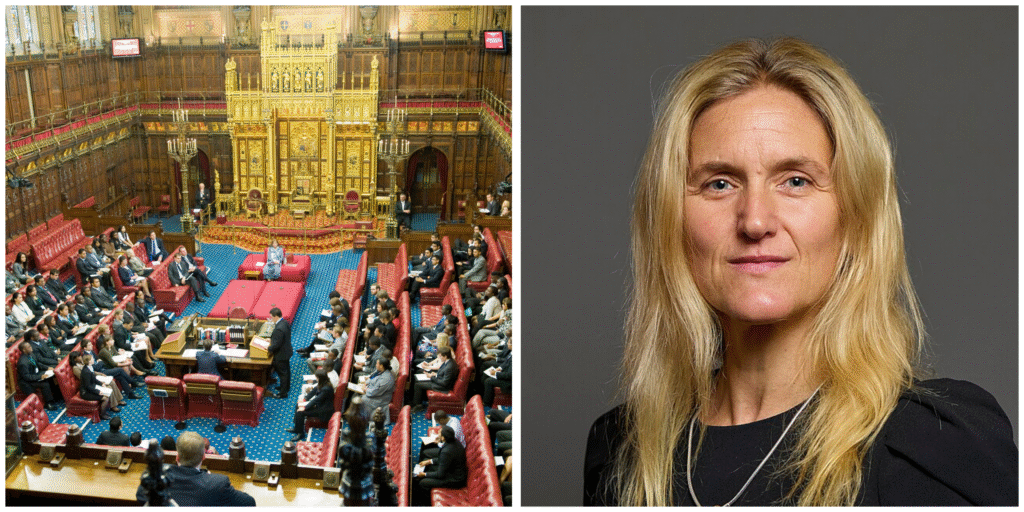
Day 9 of the Committee Stage in the House of Lords began with the conclusion of a debate on amendments to Clause 2 of the Bill carried over from the previous week. Clause 2 sets out eligibility criteria, and on 23 January, Baroness Finley, a consultant in palliative medicine, raised concerns over the Bill’s fundamental requirement that assessing doctors are satisfied that a patient had to be “reasonably expected to die within six months”. This “six-month rule”, she said, was unsafe and unworkable. After calling it arbitrary and unverifiable, she asked:
“Do doctors need to be 95% confident or 50% confident to rule that the patient will die within six months to be eligible? No validated clinical tools or tests exist to make such determinations with sufficient reliability for life-ending decisions. This lack of reliable knowledge leaves clinicians to face pressure to make prognoses they cannot substantiate, with concurrent legal risks and ethical dilemmas.”
“A time-based legal threshold”, she said, “would turn population-level averages into high-stakes individual errors, approving some who are not within six months and denying others who are.” Citing a study of more than 2,000 palliative care patients with advanced cancer, she said clinical predictions were accurate in only 35% of cases.
Lord Pannick, a strident supporter of the Bill, defended the reliance on a six-month terminal prognosis, arguing that the current wording recognised the absence of scientific certainty and absolute knowledge. It was, instead, about giving people a choice.
“…if I am told by my doctor that, sadly, I have an inevitable progressive illness or disease and my death can reasonably be expected within six months, I should have the choice of saying that I wish to end my life by taking advantage of the provisions of this Bill. Each of these amendments seeks fundamentally to undermine the core of the Bill and the philosophy that guides it. I entirely accept that its opponents disagree, but this is the core of the Bill and why it rightly so provides.”
Since the Bill was first introduced, its promoters have repeatedly cited opinion polls showing public support for the legislation. Lord Frost, however, argued that this support was largely based on the mistaken assumption that the Bill was intended to help people experiencing intolerable pain. As Lord Pannick’s comments confirmed, the Bill’s purpose is the promotion of individual autonomy, not the elimination of suffering. This was an issue Lord Frost wished to address by tabling an amendment to restrict eligibility only to those whose physical pain could not be alleviated by palliative care. This change, he believed, would also “stop drift and the slippery slope.” It was, he said:
“…relatively—not totally, but relatively—easy to identify unbearable suffering. As has been noted, it is usually obvious from demeanour and body language when there is frequent and unbearable pain. This helps distinguish between qualifying and non-qualifying reasons for access to assisted dying, such as social pressures.”
Responding to the view that opponents of the Bill are merely motivated by religious objections, Lord Frost suggested that a philosophical commitment to personal autonomy was no less deserving of such a challenge. In conclusion, he argued that personal autonomy was not a sufficient basis for legislation, saying:
“Indeed, under the guise of autonomy, and sort of sneaked into the Bill, is a subversion of the general taboo on suicide, the general societal efforts to prevent it, and the legal prohibition on assisting it. The Bill proposes to change the translation of that moral framework into legal provisions, and that is why we must be so cautious that we know what we are doing if we proceed with the Bill. We have heard many complaints about the speed of discussion in this House. The truth is that the Bill, as it stands, is unsafe at any speed.”
After an extensive debate over two days (23 January and 6 February), Lord Falconer rejected any assertion that the wording of Clause 2 was deficient in any way. Requiring applicants to be suffering irremediable pain was, he said, too subjective a standard. The prognosis by two medical professionals that a person had six months or less to live was all that should be necessary to approve a request.
Closing the anorexia loophole
In what is possibly one of the most significant occurrences over the nine days of debate, Lord Falconer tabled an amendment (Amendment 87) which he argued would prevent sufferers of anorexia from being considered for assisted suicide due to a state of extreme malnutrition. As several Peers noted, his alternative wording actually weakened the existing text as it only applied to mental disorders. As Baroness Grey Thompson pointed out, some US states where assisted suicide is lawful have witnessed a growing trend of people without a terminal illness deliberately starving themselves in order to receive lethal drugs.
“In Oregon, a woman with early-stage dementia recently starved herself into eligibility. In Colorado, ‘severe protein-calorie malnutrition ’has been recorded as the primary qualifying terminal illness in 30 cases over three years, 18 in the last year alone.”
To ensure this would not happen if the Bill were to pass, Baroness Keeley proposed a further change to Lord Falconer’s amendment. She argued:
“As drafted, Amendment 87 would inadvertently dismantle another essential safeguard that would ensure that people who are not terminally ill cannot make themselves terminally ill by deliberately ceasing food and fluids. This issue is entirely distinct from anorexia. The other place [the House of Commons] added Clause 2(2) specifically to prevent that. Amendment 87A restores that protection so that Amendment 87 would safeguard both groups—those whose mental disorder limits eating and drinking and those who might deliberately restrict intake.”
Amendment 87A will, it is hoped, guarantee that no one would qualify for lethal drugs by refusing food or fluids. As an agreement on this issue had been reached across all sides of the House, both amendments were adopted without a vote. This consensus was, however, short-lived as the discussions turned to the subject of mental capacity.
A Question of Capacity
Few issues have caused as much complex debate as the Bill’s reliance on the Mental Capacity Act 2005 (MCA). The Bill requires both of the assessing doctors and the panel to be satisfied that an applicant has mental capacity. However, since the MCA contains a built-in assumption of capacity, a range of medical and legal experts have expressed serious concerns about its suitability for assisted dying decisions. Major changes were proposed by Baroness Finley and Baroness Hollins, but the lead amendment in the group was introduced by Baroness Berger. She began by stressing the gravity of the issue, saying:
“These amendments go to the heart of a question the Committee must answer honestly: what level of capacity is required for the state to assist a person to end their life, and, crucially, is the existing framework of the Mental Capacity Act 2005 sufficient for a decision that is irreversible, permanent and final?”
Lord Sandhurst, who brought forward measures suggested by the Complex Life and Death Decisions (CLADD) group based in King’s College, London, also reinforced this point.
“It is very important that capacity is properly assessed. We have heard about the difficulties with the Mental Capacity Act. We have to know that someone really does retain the information throughout, or if they have not retained it, that it is re-explained to them. We have to ensure that this whole point of capacity is seriously addressed. I am not casting doubts on the seriousness of those who put these proposals forward, or the proponents of the Bill, but I suggest to this House that on the issue of capacity, the Mental Capacity Act is not the right Act.”
Rejecting all such criticisms, supporters of the Bill repeatedly invoked the view of Sir Christopher Whitty, the Chief Medical Officer for England, that it would be unwise to introduce a new legal framework for deciding questions of capacity. Unfortunately, while arguing that clinicians have become familiar with the MCA over the last 20 years, he managed to misrepresent how it actually functions. Lord Harper reminded the House that Sir Christopher was compelled to write to MPs to correct his mistake.
“I think Chris Whitty had to row back from that in a letter that he sent, as my noble friend Lady Berridge said. So, can the noble and learned Lord set out his understanding of the position under the MCA for these sorts of decisions? Legal experts have asserted that it is factually incorrect in relation to the Mental Capacity Act. Alex Ruck Keene KC, whom my noble friend Lord Sandhurst mentioned as being part of the CLADD group, has confirmed that, while common law may once have suggested a sliding scale, the MCA itself contains no such requirement. Indeed, that is one of the things that the amendment that they have drafted deals with.”
After a lengthy debate, Lord Falconer made clear that he had no intention of accepting any of the alternatives presented to him.
“In my view, having listened very carefully, read a lot about this and talked a lot about it, the idea that two separate tests should apply is damaging, confusing and wrong. Although it is helpful because it is detailed and sets out what the noble Baroness has in mind, I am not in favour of that particular change to the Mental Capacity Act.”
On withdrawing her amendment, Baroness Berger:
“Given that my noble and learned friend Lord Falconer indicated in his response that he will defend the Mental Capacity Act as the foundation for the Bill, it is disappointing that he has dismissed the specific provisions that could be set aside and could make a difference. …I hope that he will further consider that question, including how experts, who still have so many doubts, can be consulted in more detail.”
As with the other serious issues covered in recent weeks, the question of capacity and the requirement for a six-month terminal prognosis will be raised again when the Bill reaches its Report Stage. After nine days of debate, however, Lord Falconer has made only two concessions on matters relatively marginal to the Bill—additional protections for vulnerable young people and an amendment to rule out malnutrition as grounds for a terminal diagnosis. The debate on the Bill is now set to pause for the next two weeks. When the Committee returns, many Peers will be expecting Lord Falconer to present proposals that will finally address their concerns.
If you’re reading this and haven’t yet donated to SPUC, please consider helping now. Thank You!