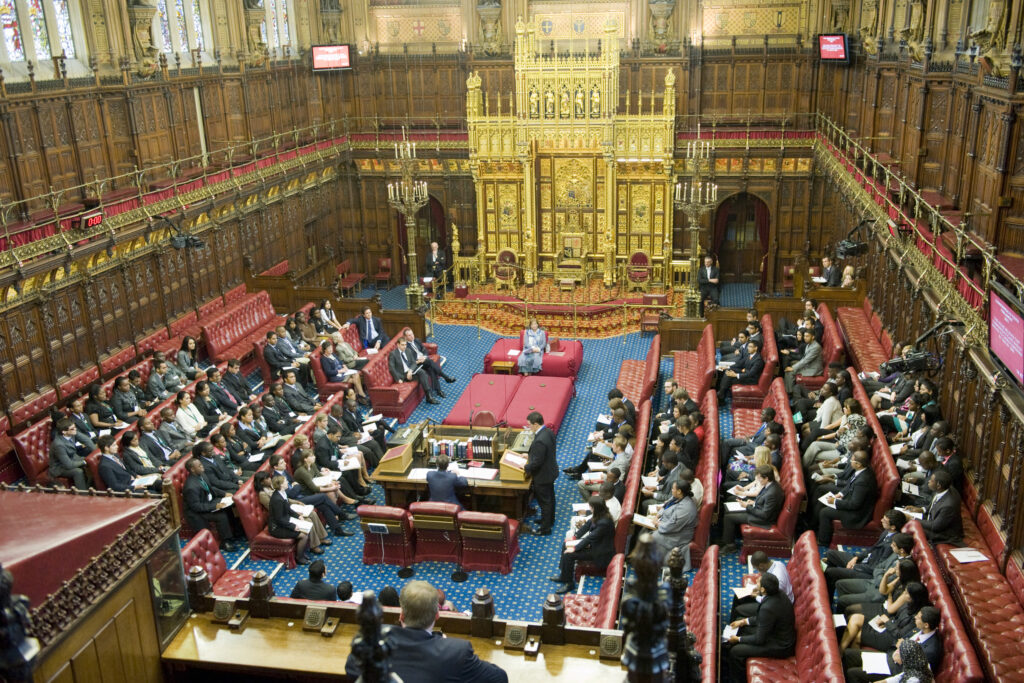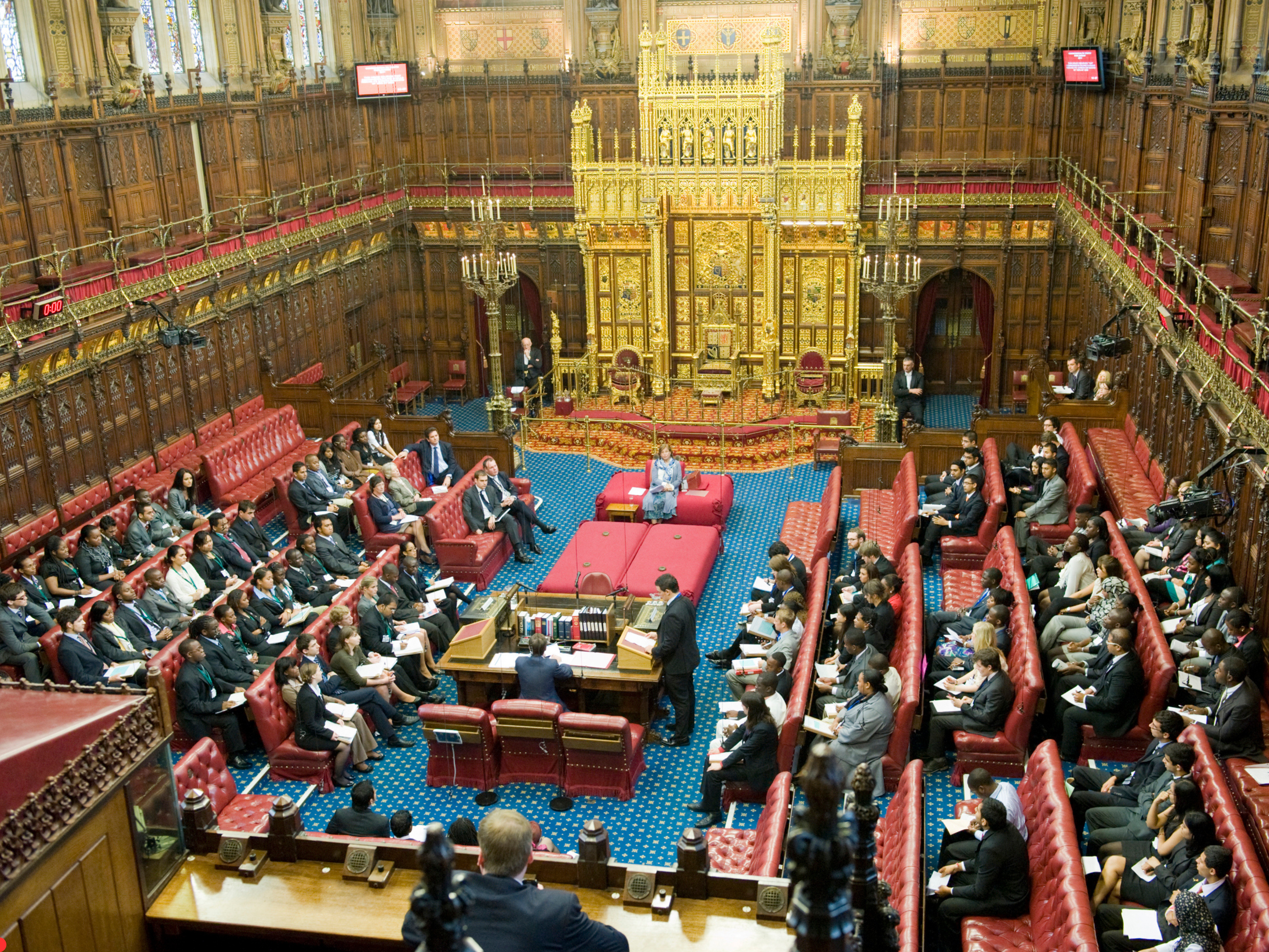
Supporters of assisted suicide are calling on the Government to provide even more time for the passage of the Terminally Ill Adults Bill. Although the legislation had already been given an extra 10 days in the Upper Chamber, on Thursday 8 January, the Bill’s sponsor, Lord Falconer of Thornton, tabled a motion urging the Government to make yet more time available for the controversial legislation. After the motion was adopted unopposed, Lord Kennedy, the Labour Chief Whip, intimated that more time would be found outside the Government’s legislative programme.
In an effort to win over potential opponents of the motion, Lord Falconer indicated that in future he would be more receptive to proposed amendments from the Bill’s critics. His willingness to compromise, however, was short-lived, and during the debate the following day, he was reluctant as ever to concede that his Bill required amending in any way.
Judges v Expert Panel
Friday’s discussions were dominated by two major issues. In the first half of proceedings, Peers argued over a proposal from Lord Carlile aimed at reintroducing a judicial process to the scheme. An original feature of the Bill, the involvement of a High Court judge was ditched during the committee stage in the Commons in favour of an expert panel made up of a senior lawyer, a psychiatrist and a social worker. Lord Carlile, who is opposed to the Bill, believes a court procedure would be safer than the current proposal. Opponents of the Bill were, however, divided on the merits of either system.
Overall, this part of the debate merely highlighted the dangers inherent in any procedure designed to authorise the premature death of an innocent person. Whatever process is ultimately chosen, it is likely to result in a box-ticking exercise simply because of the sheer number of cases to be dealt with. Conservative estimates project 6000 applications annually for assisted suicide in the first years after its introduction. Evidence from other jurisdictions shows that the initial numbers rise dramatically once assisted suicide becomes normalised.
No concern for palliative care
The second half of proceedings concentrated on palliative care, with Baroness Finlay of Llandaff moving an amendment seeking to ensure ensures “all terminally ill persons seeking to take up assisted dying support have had their needs assessed by a multi-professional specialist palliative care team.” Despite it being universally accepted that palliative care provision is not good enough, Lord Falconer dismissed the amendment out of hand, concluding: “Although I am open to any discussion people want, I think we have done enough and addressed head-on these issues, so I invite the noble Baroness to withdraw her amendment.”
Unsurprisingly, Baroness Finlay, a highly respected expert in palliative care, was not satisfied with this response, saying: “I am deeply disappointed in the response from the noble and learned Lord, Lord Falconer, because it seems that he has not taken on board some of the really important points that were made… I believe that we must – not just will but must – come back to this on Report, with all those people who have shown an important investment in time to consider the needs of the individual who is in such distress that they want an assisted death. We cannot accept that some people are potentially going down that road simply because care is not available. With that, and with the commitment to come back later, I beg leave to withdraw the amendment.”
The Government continues to stonewall on vital issues
Several Peers put questions to the Government front bench, which the Minister repeatedly sidestepped.
During the debate on the possible reintroduction of a High Court judge to the process, Lord Harper asked about reports that Kim Leadbeater decided to abandon judicial oversight following advice she had received from the Government that it would place an unsustainable strain on the court system. Lord Gove, echoing Lord Harper’s point, put the question directly to the Minister:
“I ask the Minister at the Dispatch Box either to confirm or deny that report, and if it is the case that the Government gave advice to the promoter of the Bill, will that advice be shared with this House so that we can be better informed before we make any decision?”
Baroness Levitt declined to give a clear answer, stating:
“I am going to repeat the words that were used by my honourable friend, the Minister for Courts in the other place. The decision as to the introduction of the panel was made by the sponsor.”
One of the major concerns raised in the debate is the funding an assisted suicide scheme would require, which would be significant, whatever model is adopted. Despite casual reassurances from Lord Falconer, many Peers wished to know for certain where the money was to come from. At present the Government’s framework for palliative care won’t be published until after the passage of the Bill is expected to have been completed. Quoting Lord Stevens of Birmingham, Baroness Fox said this “seems to me a dangerous reversal of the timetable that we require”.
Once again, Government representatives deflected all such questions, insisting that because it was a Private Members ’Bill, there was no obligation to guarantee that money for the scheme would not be diverted from funding earmarked for palliative care.
The Bill remains contentious
While opponents of the Bill did not seek to block Lord Falconer’s motion calling for an unprecedented extension of the time allocated for its passage through the Lords, supporters of assisted suicide are still extremely nervous. Despite the promise of yet more Parliamentary time, there were several attempts to pressure critics into silence.
Speaking from the Government benches, Baroness Wheeler attempted to draw the debate to a close, stating:
“My Lords, it is now 2.33pm. I suggest that the Committee might like to hear from Front-Benchers now to ensure that we can conclude proceedings in an orderly manner, as planned, around 3pm.”
Lord Goodman of Wycombe, however, rose to speak:
“I have an amendment to which I have not yet been able to speak. Surely it is right and proper that those of us who have tabled amendments should be able to speak – especially where, as is true in my case, a noble Lord was a member of the Select Committee that examined this Bill.
Moments later, when Peers objected to Lord Harper’s intention to speak, he insisted:
“…there is no requirement in the Companion that you can speak in a debate only if you have tabled an amendment. If we want to finish at 3 o’clock, we can either go slightly past 3 o’clock or we can stop at 3 o’clock and resume this group next week. I wish to make one point that has not yet been made and which I think is pertinent to the debate, and I believe I am perfectly in order doing so.”
Lord Blencathra then followed this with what was, by the standards of the Upper House, an angry intervention:
“My Lords, this is a self-regulating House, and that does not mean that a Government Whip can regulate who can speak and who cannot. I echo the point made by my noble friend. If the only way one can speak in these debates is to sign amendments, I know what to do in future.
“I spoke for five minutes on the Friday before Christmas and said not a peep in the debate earlier today because it was not my speciality. I have been waiting here for two hours to make a speech on palliative care, and we seem to have been refused the right to do so because the Government Whip wants us not to say anything so that we can finish at 3 o’clock. I agree that we can finish at 3 o’clock – it is a simple matter for the House to adjourn and come back to polish off this matter next Friday morning – but it would be absolutely outrageous for noble Lords who have not had a chance to speak at all on palliative care to be refused the right to do so because the Government have imposed an arbitrary timetable on us.”
Although the allocation of even more time means that there is less likelihood of it running out of time, the problems with the Bill are so serious that the battle over assisted suicide is far from over. Opponents of the Bill are still deeply concerned and highly motivated to block legislation that is widely seen as a deadly threat to vulnerable people.
If you’re reading this and haven’t yet donated to SPUC, please consider helping now. Thank You!